

Contact Us
 Subscribe to this blog via RSS
 Join us on LinkedIn
Archives
Categories
Circuit Split Puts Some Shine on ‘Shine Ban
For over 150 years, federal law has prohibited the use of home distilleries. The essential purpose of the ban is to facilitate the taxing of distilled spirits, which has long been a font of government revenue. In fact, distilled spirit taxation was the original revenue source for the federal government (see “Whiskey Rebellion”). For just as long, there have been attempts to thwart these tax collection efforts, and the ensuing give and take have left a profound stamp on American culture, such as the creation of NASCAR from moonshine runners evading those pesky “revenooers.”
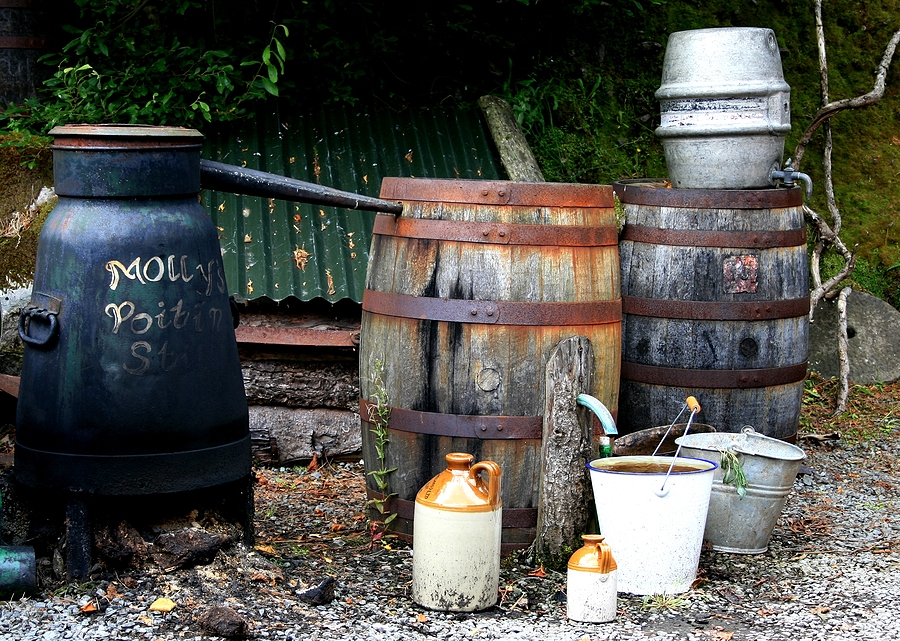 Recently, a pair of back-to-back federal courts of appeal decisions opened up an entirely new front in the war against home distilling. While the prohibition on home distilling was reaffirmed in one, another struck down the prohibition entirely, and the future of distilling hasn’t looked as open as it does at this very moment since almost the age of Lincoln.
The law banning home distilling was put into effect in 1868 as part of Reconstruction efforts when the government desperately needed revenue and is enshrined at 26 U.S.C. 5042(a)(2) and 5053(e). Taxation is serious business, and distilling spirits anywhere other at a location qualified to do so by the Alcohol and Tobacco Tax and Trade Bureau (“TTB”) carries harsh penalties for intent to defraud the U.S. out of taxes, such as a $10,000 fine or up to 5 years in prison.
The prohibition doesn’t similarly apply to other forms of alcohol, which has led to increasing dissatisfaction with the ban on home distilling. Home production of alcohol is available for both brewing and winemaking up to certain amounts, which led to craft industries in each to grow from experimentation into independent production. More began to question whether similar circumstances should exist for distilling, and in 2023 and 2024, putative hobby distillers asked regulators for federal permits. The TTB was firm in its response: absolutely not.
Hobbyists took the next step – challenging the law in court. On April 10, 2026, the prohibition on home distilling was struck down in the Fifth Circuit, which covers the southern states of Texas, Louisiana, and Mississippi, and folks in New Orleans can now raise a glass of bathub gin to celebrate. Less than two weeks later, the Sixth Circuit Court of Appeals reached the opposite conclusion, upholding the 158-year ban for the folks in Michigan, Ohio, Tennessee, and Kentucky, who may only raise a glass of spirits produced in a licensed distillery and not in their basement.
With these two disparate holdings, these courts have created a “circuit split” – a legal contradiction that can only be resolved by the United States Supreme Court for consistency across all federal law. Such splits are often successful in prompting action from the Supreme Court, but they aren’t a sure thing – that court only accepts about a third of circuit split cases for review. This difference in legal effect could stay in place for at least the next year or so, or it may be of indefinite effect, pending Supreme Court action.
While the end of a ban on home distilling might be imminent (and in place for those in the Fifth Circuit), there isn’t yet in the works an end to the requirement of excise taxes paid on distilled spirits produced for home distillers, and hobbyists would still need to abide by all TTB regulations and permitting. Still, it’s a potentially exciting time for those ready to fire up their home stills – just make sure to give those revenooers their due.
 T. Neal Morris is a Member with McBrayer in the Lexington office. Mr. Morris focuses his practice in the area of hospitality & tourism law, alcoholic beverage regulation, administrative law, employment litigation and insurance defense. He can be reached at (859) 231-8780 or nmorris@mcbrayerfirm.com.
